


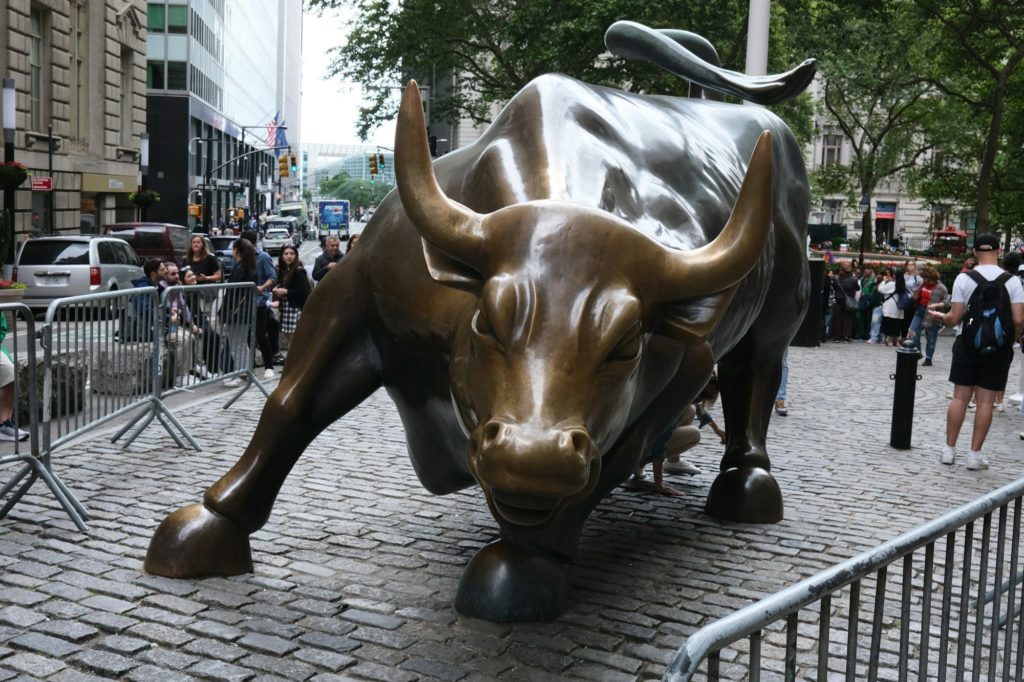
After a volatile but ultimately rewarding 2025, Wall Street is entering the new year with an unusually unified message: the stock market’s rally may still have room to run in 2026. Across major banks, asset managers, and independent research firms, forecasts indicate another year of gains for U.S. equities, potentially marking a fourth consecutive annual advance.
Such a streak would be rare in modern market history, especially given the backdrop of elevated interest rates, geopolitical uncertainty, and lingering concerns about AI valuations. Yet strategists argue that earnings growth, easing inflation, and a resilient U.S. economy continue to push the balance toward optimism.
A Rare Consensus Emerges on Wall Street
Large institutions that were cautious or outright bearish earlier in 2025 have largely revised their views, now projecting mid- to high-single-digit gains for the S&P 500 next year. Some firms see upside closer to 10% if earnings growth broadens beyond a narrow group of mega-cap technology stocks. That consensus has been shaped by experience. Repeated calls for a major pullback over the past three years have failed to materialize, even as markets absorbed aggressive rate hikes, tariff shocks, and sharp intra-year drawdowns.
Many strategists now argue that betting against U.S. equities has been the wrong trade in an economy that continues to surprise to the upside. At the same time, several market veterans caution that unanimous optimism can itself be a warning sign. When expectations are uniformly positive, markets can become more vulnerable to unexpected shocks — even if the underlying trend remains intact.
Earnings, Rates, and the AI Question
Fundamentals remain key to the bullish case. Corporate earnings are expected to grow again in 2026, supported by steady consumer spending, improving margins, and productivity gains tied to automation and AI investment. Importantly, analysts increasingly expect profit growth to spread across sectors such as industrials, financials, healthcare, and energy, rather than remaining concentrated in a handful of technology giants.
Monetary policy is another pillar of optimism. Inflation has cooled meaningfully from its post-pandemic highs, and while the Federal Reserve is expected to move cautiously, most economists anticipate lower policy rates over the course of 2026. Even modest easing could provide support for equity valuations and reduce pressure on highly leveraged companies.
AI remains both a tailwind and a risk. Bulls argue that AI spending represents a multi-year economic transformation, not a speculative bubble, with ripple effects across data centers, energy, software, and manufacturing. Skeptics counter that expectations may still be running ahead of realized returns. For now, most strategists fall somewhere in between, viewing AI as a durable growth driver but no longer the sole engine of market gains.
Risks That Could Still Disrupt the Rally
Despite the optimism, few forecasters are ignoring downside risks. Valuations remain high by historical standards, leaving less margin for error if growth slows or earnings disappoint. Some analysts also warn that corporate guidance could turn more conservative after several strong years, potentially weighing on sentiment.
Policy uncertainty continues to loom large. Trade tensions, changes in tariff policy, and fiscal decisions tied to taxes and government spending could all introduce volatility. There is also the risk that inflation proves stickier than expected, forcing the Fed to keep rates higher for longer — a scenario that could challenge equity multiples. Geopolitical risks, from ongoing conflicts to election-related uncertainty abroad, add another layer of unpredictability. While markets have shown a remarkable ability to look through shocks, strategists acknowledge that confidence could be tested if multiple risks materialize at once.
Looking Ahead
Heading into 2026, Wall Street’s overwhelmingly bullish stance rests on a familiar mix of easing inflation, expectations for lower interest rates, and another year of solid earnings growth. Strategists broadly believe the Federal Reserve will have more flexibility to support the economy if growth cools, while corporate profits are expected to expand beyond a narrow group of mega-cap tech leaders. That combination has reinforced confidence that equities can extend their multi-year rally, even after sizable gains.
Still, with valuations elevated and optimism running high, markets may prove more sensitive to policy missteps, geopolitical shocks, or disappointments around AI-driven growth assumptions. Investors are likely to watch closely for signs of broader market participation, margin durability, and the pace of Fed easing as early indicators of whether the rally can sustain its momentum into the second half of the year.